ASICS has done just about everything right in earning credibility within skateboarding. Rather than forcing its way into the scene, the brand has taken a measured approach, building a team of respected skaters, releasing standout videos with a distinct visual identity, and partnering with the skate shops and media outlets that matter. That momentum has only accelerated in Europe, from a video contest in Barcelona to events with Civilist in Berlin featuring riders like Jakko Ojanen, Kyonosuke Yamashita, Simon Bannerot, Victor Campillo and Emile Laurent.
Yet despite all that visibility, one shoe has largely flown under the radar. While most clips feature the Japan Pro or Gino Iannucci’s Leggerrezza FB, the GEL-Flexkee Pro has quietly remained ASICS’ most technical, and arguably most ambitious, skate shoe. It’s also one of the most expensive, retailing at around €140.
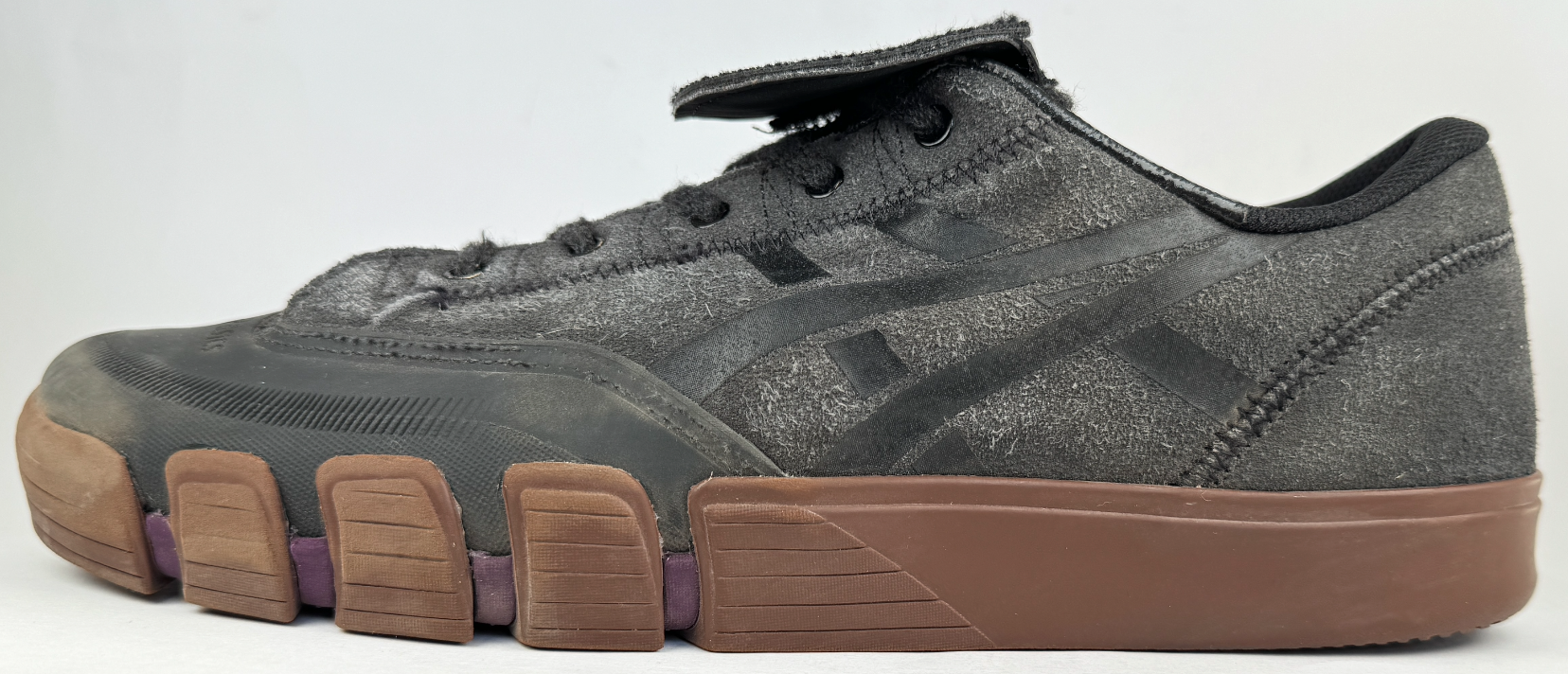
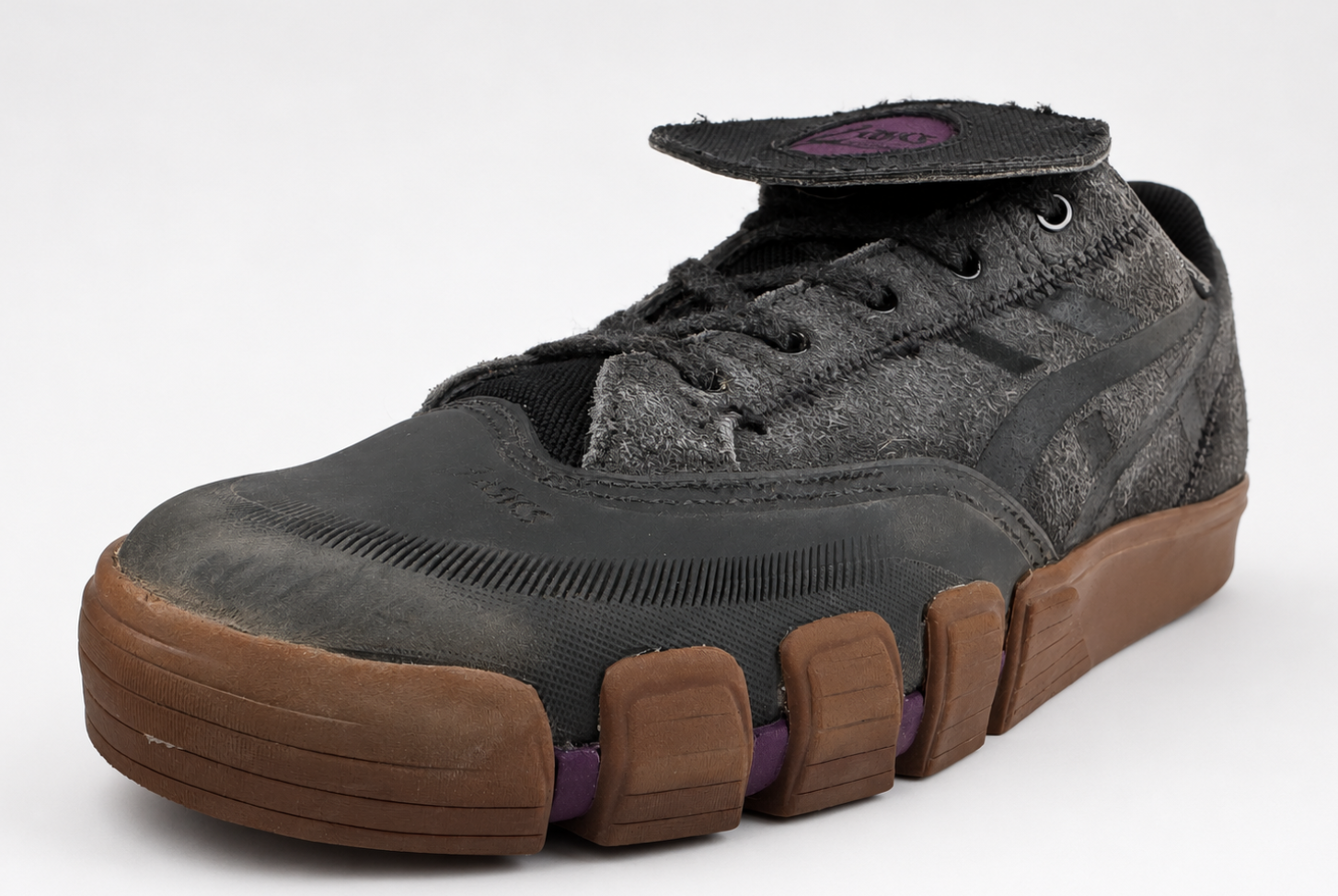
At first glance, the Flexkee Pro stands out immediately. The asymmetrical grooves wrapping around the toe box look unlike anything else on the market, raising an obvious question: how does that shape affect flick? According to ASICS, the design wasn’t created as a visual statement, but to deliver more predictable flex where skateboarders need it most. Originally released as one of the three launch models alongside the Japan Pro and Vic NBD, the shoe has now evolved into the Gel-Flexkee Pro 2.0, featuring a redesigned toe cap aimed at improving comfort and durability while retaining its unconventional construction.
In an era where skate shoes are increasingly borrowing ideas from performance footwear, and even climbing shoes, the Gel -Flexkee Pro 2.0 is one of the few models that genuinely looks and feels different. We never had the chance to skate the original, but after spending time in the 2.0, we wanted to find out whether the engineers at the ASICS Institute of Sport Science have created one of the most advanced skate shoes available today. Read on below to see how they performed in our weartest.
The Asics Gel Flexkee 2.0 fits true to size.
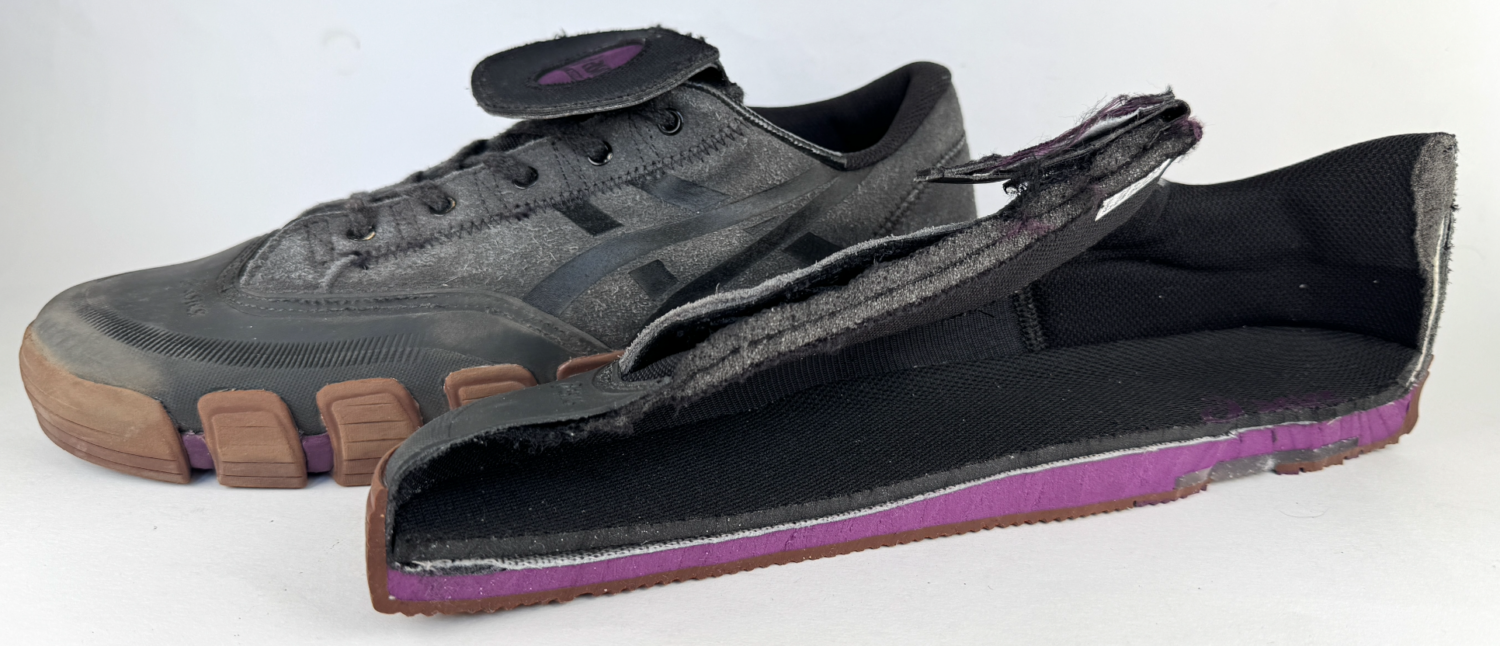
The Asics Gel Flexkee 2.0 delivered outstanding durability throughout our 10 hour wear test.
The upper features a rubber toe reinforcement that extends into the midfoot, showing only minimal abrasion, mostly along the seams where it connects to the suede panel. The asymmetrical upper also shifts the laces away from the primary flick zone, with the option to use hidden lace loops for additional protection. Asics further addressed a common failure point by reinforcing the collar lining with protective tape to reduce fraying. After 10 hours of skating, the only noticeable wear appeared on the suede toe cap, while the rest of the upper remained virtually untouched.
Durability continues underfoot. The thick outsole uses a firm rubber compound that showed the most visible signs of wear, but the abrasion was still moderate considering the intensity of the test. The outsole flex grooves improve flexibility without compromising longevity.
The trade off is flick. The combination of the firm rubber outsole and extensive rubber toe reinforcement creates a more muted flick, making flip tricks feel less crisp compared to more traditional suede skate shoes.
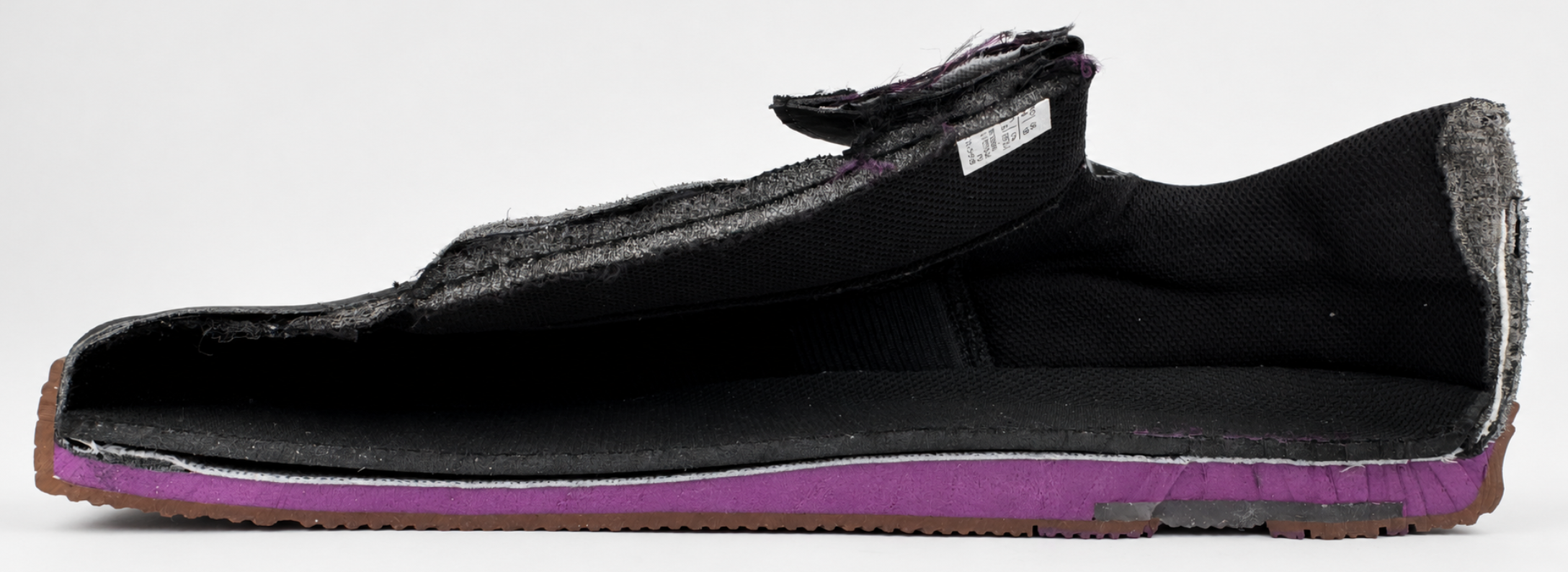
The cushioning on the Asics Gel Flexkee 2.0 strikes a well balanced feel between impact protection and board control. Its construction combines a thin cupsole, a foam wedge, an Asics Gel unit, and a cushioned foam insole.
The Asics Gel unit, which is visible on the inside and bottom of the sole, provides the primary source of heel impact protection, working together with the foam wedge that extends through the midfoot. This combination performed well during our wear test, absorbing medium impact landings effectively while maintaining the board feel and stability needed for technical skating.
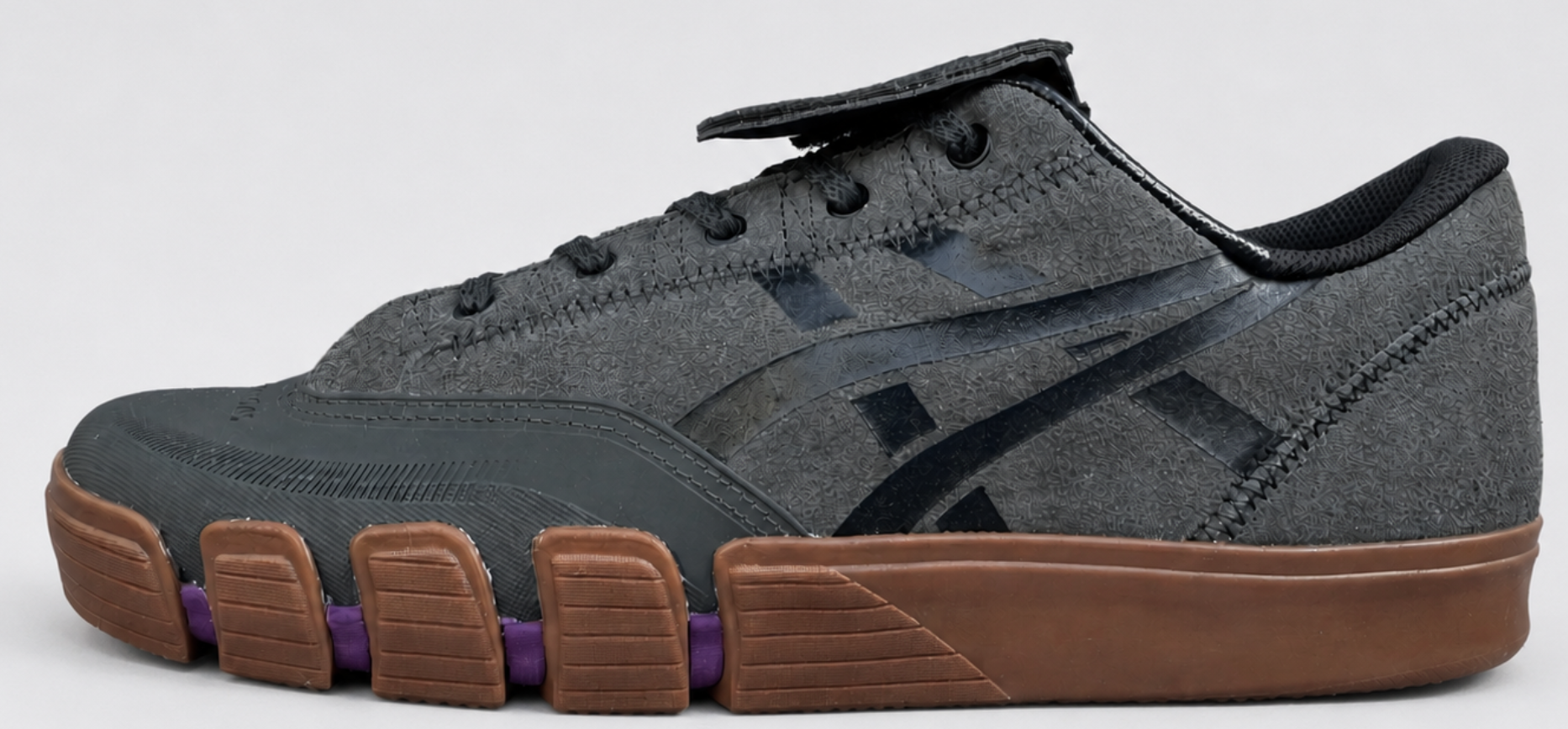
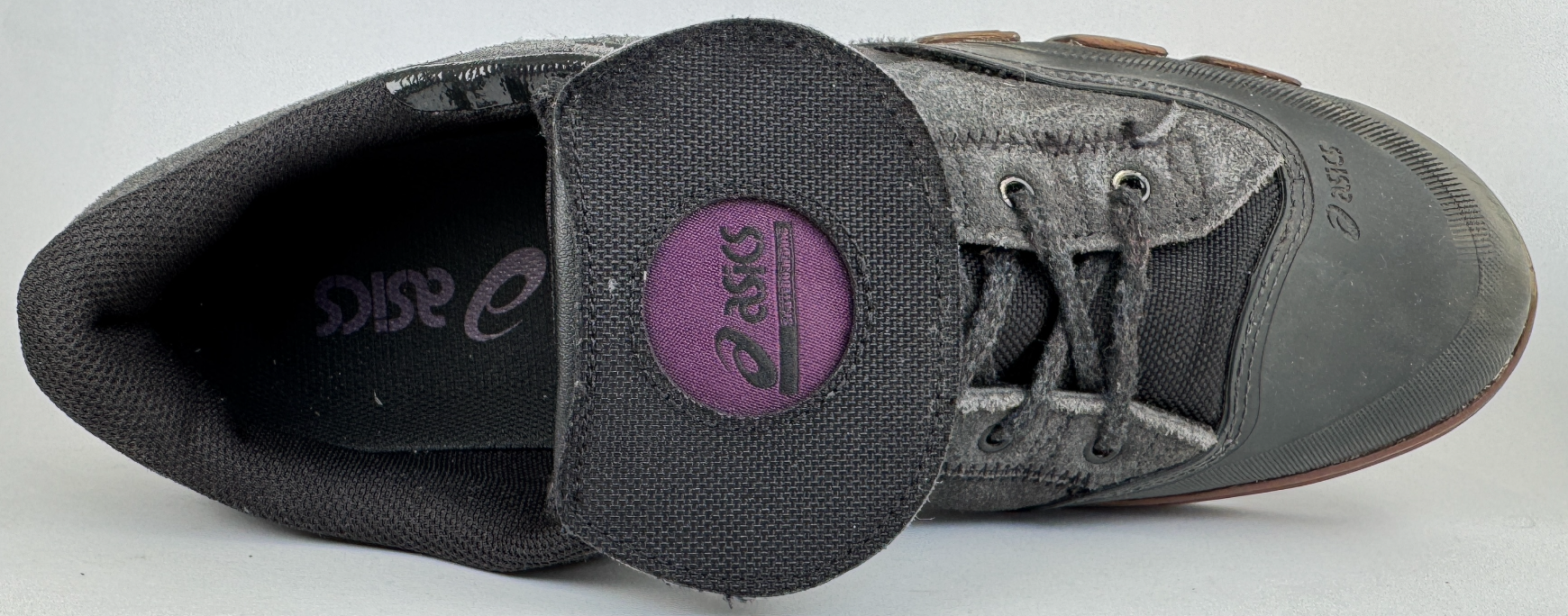
The Asics Gel Flexkee 2.0 has a distinctive shape defined by two standout visual characteristics.
Viewed from above, the shoe features a slim, close fitting upper with a folded over tongue that partially conceals its sleek, streamlined silhouette. The second defining feature is its asymmetric toe cap and lace construction. Instead of following a traditional parallel layout, the laces angle subtly toward the big toe, creating a unique visual direction while also contributing to improved durability in the primary wear zone.
Despite its unconventional appearance, the shoe delivers a snug and secure fit on the board, wrapping comfortably around the foot while maintaining a streamlined feel.
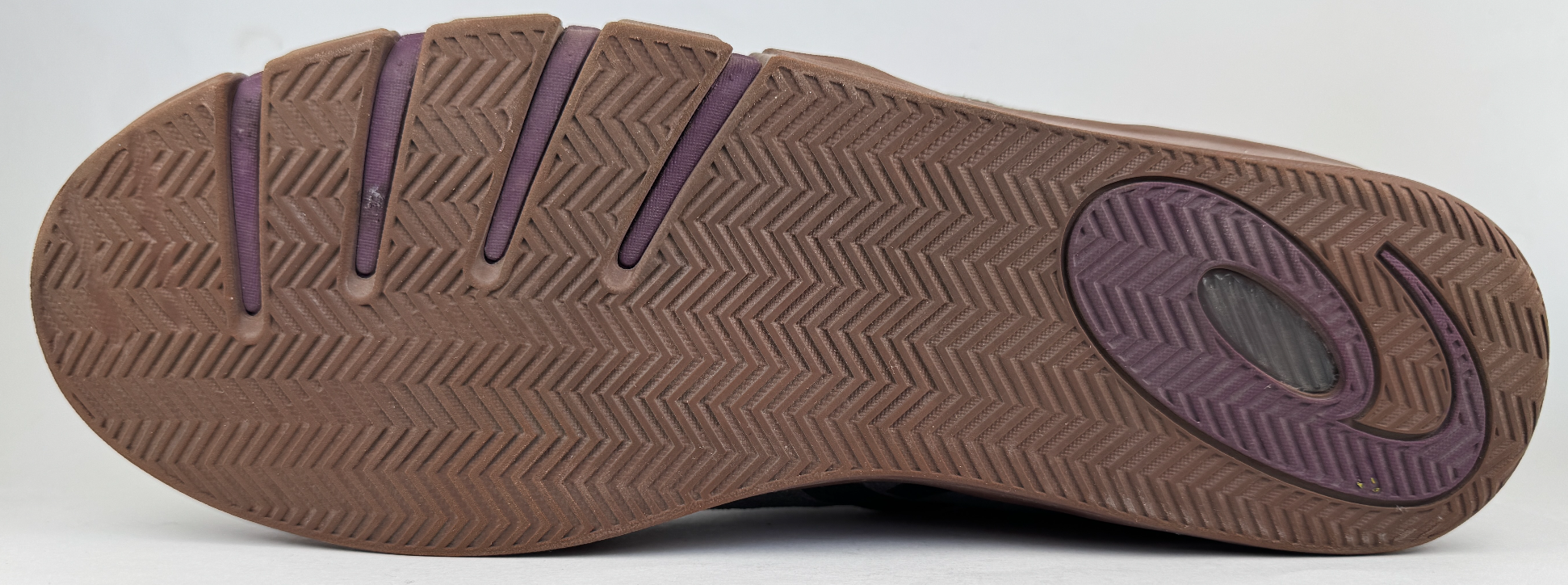
The standout feature of the sole construction is the addition of flex grooves, which enhance flexibility and, combined with the thin forefoot profile, deliver excellent board feel. The minimal material between the foot and the board allows the shoe to conform naturally to the concave, maximizing grip tape contact. Board feel is present straight out of the box, requiring no break in period, and remains consistent throughout the life of the shoe.
The trade off for the outsole’s impressive durability is a slight reduction in grip. The harder, more abrasion resistant rubber compound is less tacky than softer rubbers, which typically provide more grip but wear down faster. As a result, the Gel Flexkee Pro 2.0 delivers reliable grip for a cupsole design, though it does not stand out as one of the grippiest options on the market.
The Asics Gel Flexkee 2.0 stands out for its comfort, thanks to a combination of thoughtful design choices. The padded tongue and collar provide a snug yet comfortable fit, minimizing unwanted movement inside the shoe. Internal straps also secure the tongue in place, preventing it from shifting during longer sessions. Despite the amount of technology packed into the construction, the shoe remains relatively lightweight for a cupsole design.
Stability is another major strength. The supportive sole, combined with the slim fitting upper, creates a locked in and confident feel while skating. The heel area is particularly well reinforced, featuring multiple structural layers that help the shoe maintain its shape and support even after 10 hours of wear testing.
The Asics Gel Flexkee 2.0 delivers excellent durability, strong stability, and reliable board feel in a highly supportive package. The trade off is average grip and a less responsive flick due to its firm rubber construction.