The 7 ply maple skateboard deck we all know and love has been commercially available since the 1970s. Over the past 55 years, it has become the unquestioned standard. Sure, there have been tweaks along the way such as popsicle shapes, different wheelbases, hybrid wood cores, carbon fiber, fiberglass, and epoxy resins but commercially available skateboard decks have remained largely traditional, still relying on layered veneers and pressing techniques.
Skateboarding, and skateboarders, are not exactly known for embracing new technology. We are a culture of core lords who live by if it ain’t broke, don’t fix it.
But over the past few years, a small operation has been quietly bubbling in Salzburg, Austria. Led by skateboarder Peter Karacsonyi, it started with a simple question he asked at a young age. Why can’t skateboard decks be updated. That question led to countless hours spent in his parents’ garage with his father, experimenting with different methods to create what he hoped would be the ultimate skateboard deck.
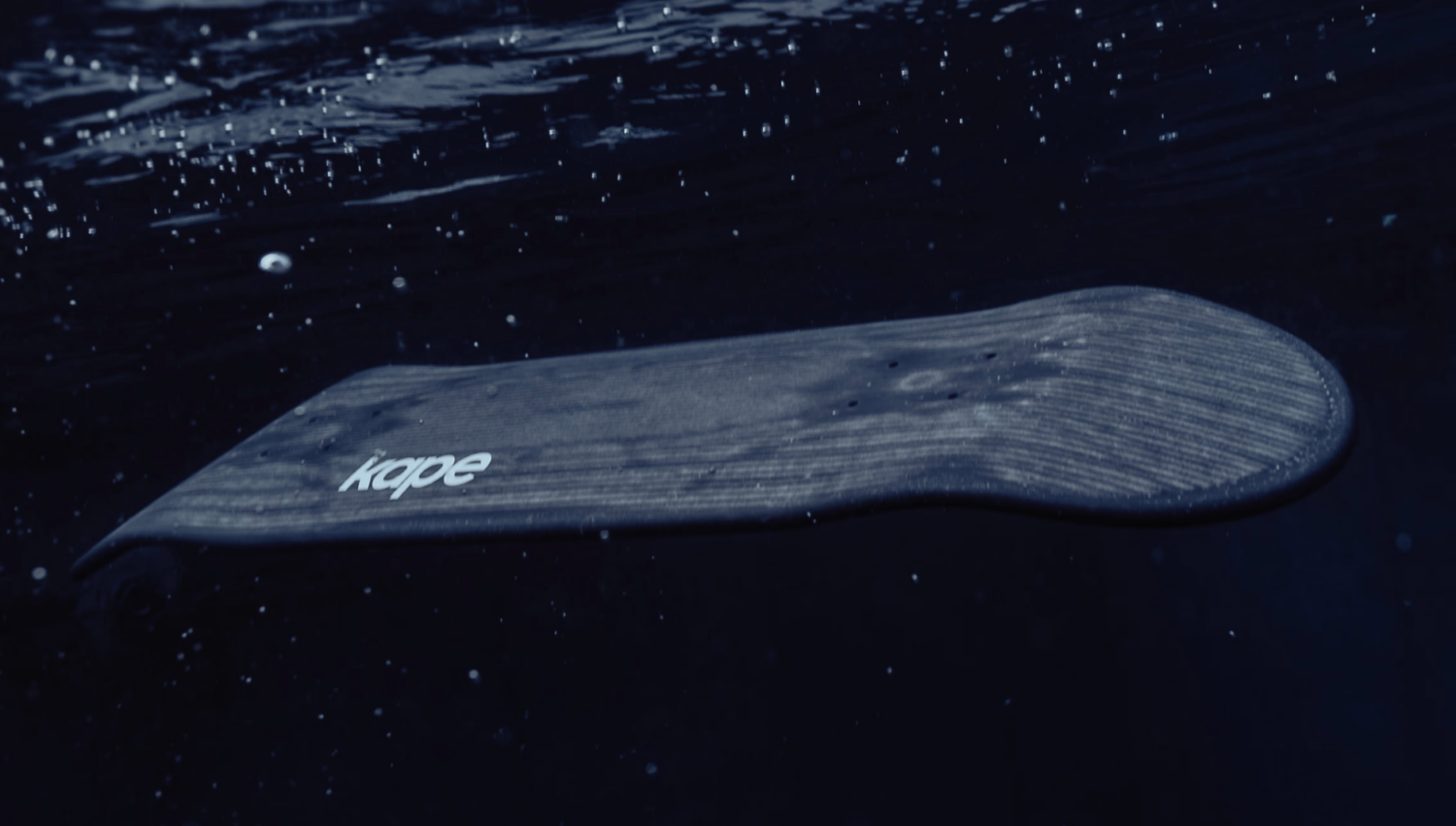
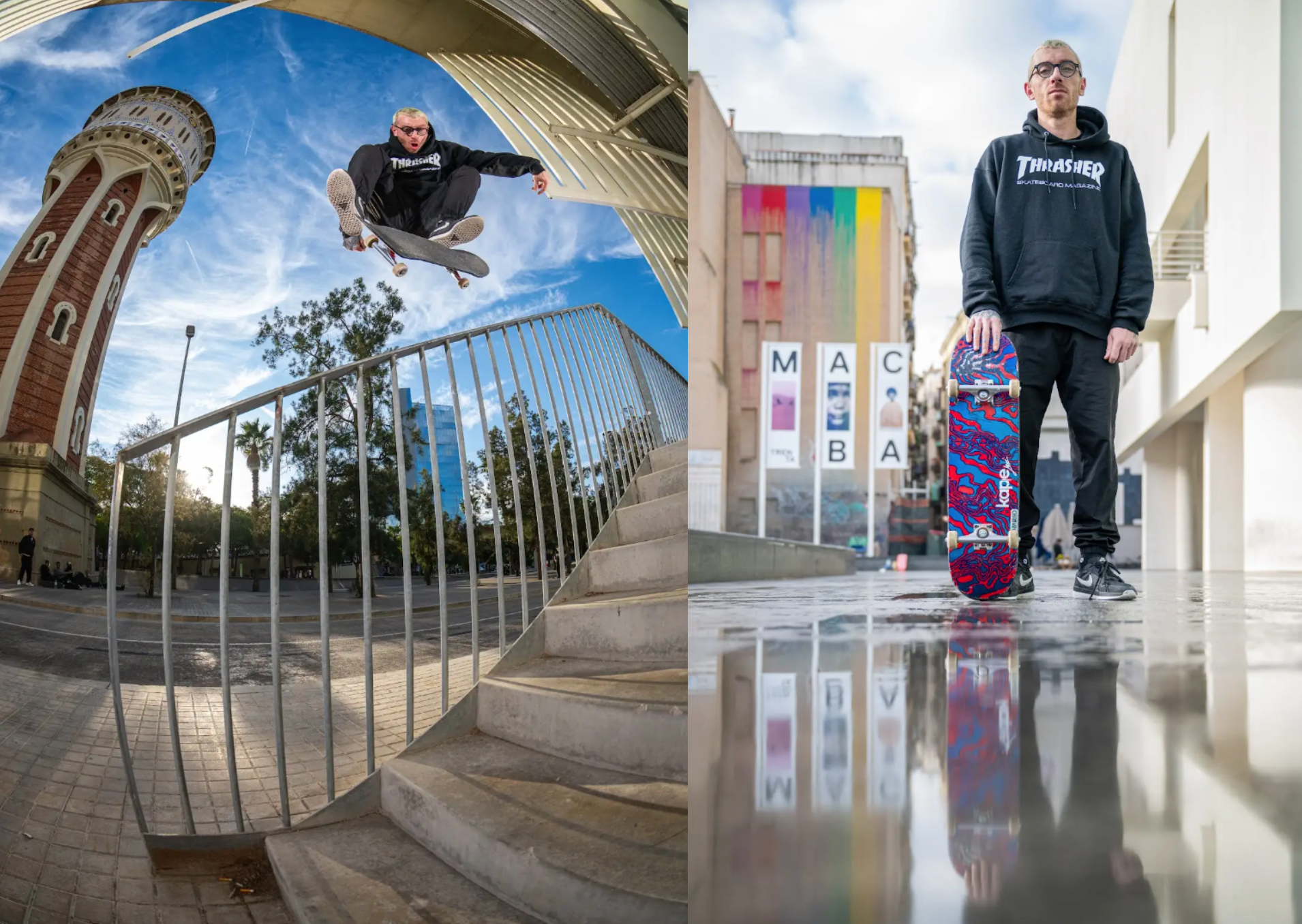
Fast forward to today, and Peter is running his own board company and factory, KAPE Skateboards. Using cutting edge manufacturing techniques, KAPE produces skateboard decks made with recycled ocean plastic and glass fibers. Boards that do not chip, do not snap easily, and still promise to feel like a classic wooden deck. Their first commercial release, The Vanguard, launched about a year ago at 200 euros. Since then, they have slowly built a team featuring tech wizard Levi Löffelberger, fresh off a Berrics part, and Adrien Bulard, the mad Frenchman who backtailed El Toro. They also dropped a little video with the guys together skating in Barcelona. While gaining momentum, KAPE has continued refining its technology, offering new shapes and sizes, and steadily bringing the price down.
Traditional skateboard decks are made by stacking seven sheets of maple plywood with alternating grain directions, placing them into a mold, and pressing them with extreme heat and pressure. Once pressed, they are cut and shaped into the decks we all recognize.
KAPE does something completely different.
After nearly ten years of experimentation and feedback, they have developed a construction based around three elements. A foam core, an injected melted plastic composite, and glass fibers for strength. Everything is molded rather than pressed, creating a deck that is fundamentally different in how it is built and how it behaves.
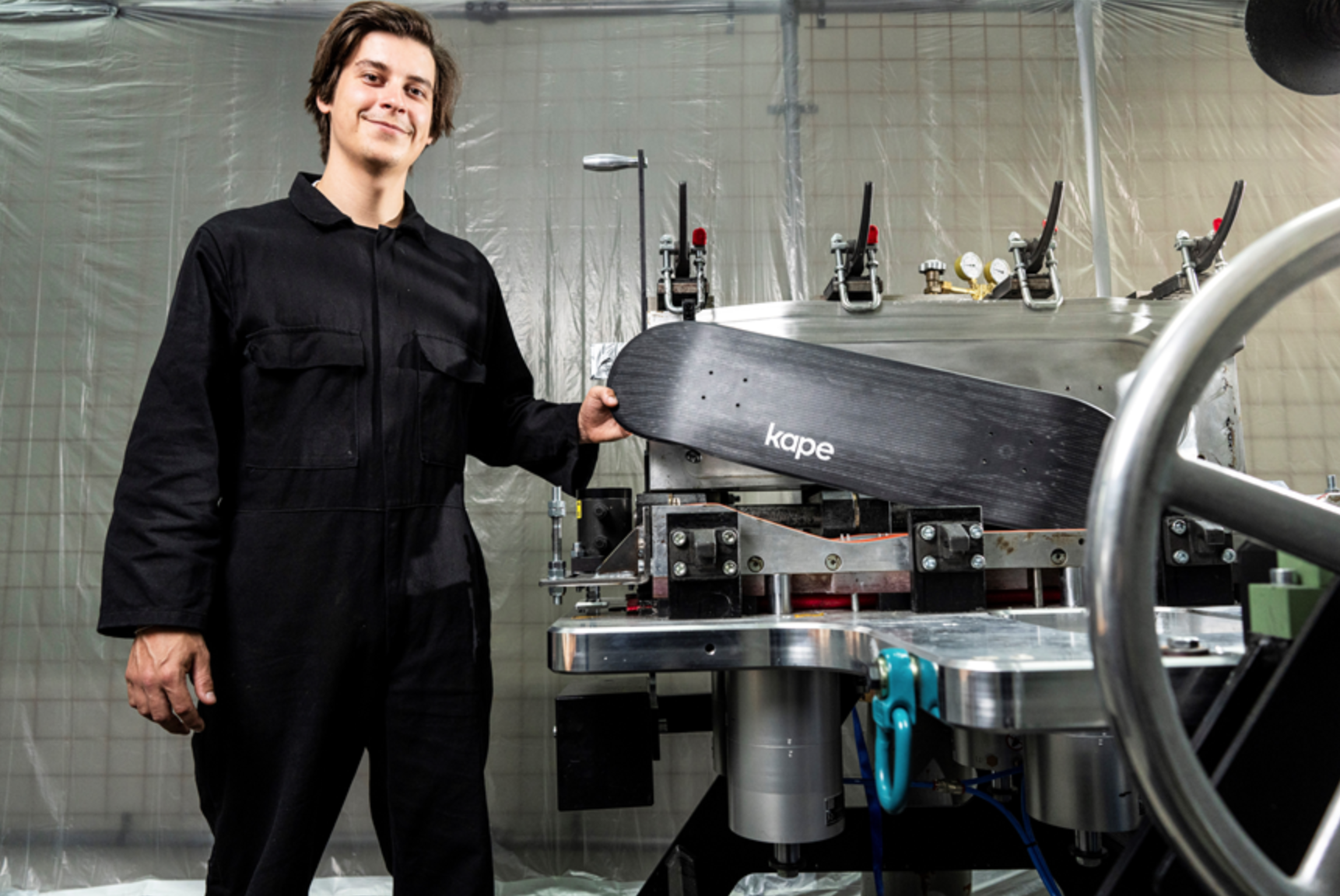
I got my hands on one of the first production runs of The Vanguard, which even came with a skate bag and carried a 200 euro price tag. Honestly, my biggest concern was not chipping or pop. I wanted to know if it felt like a wooden board.
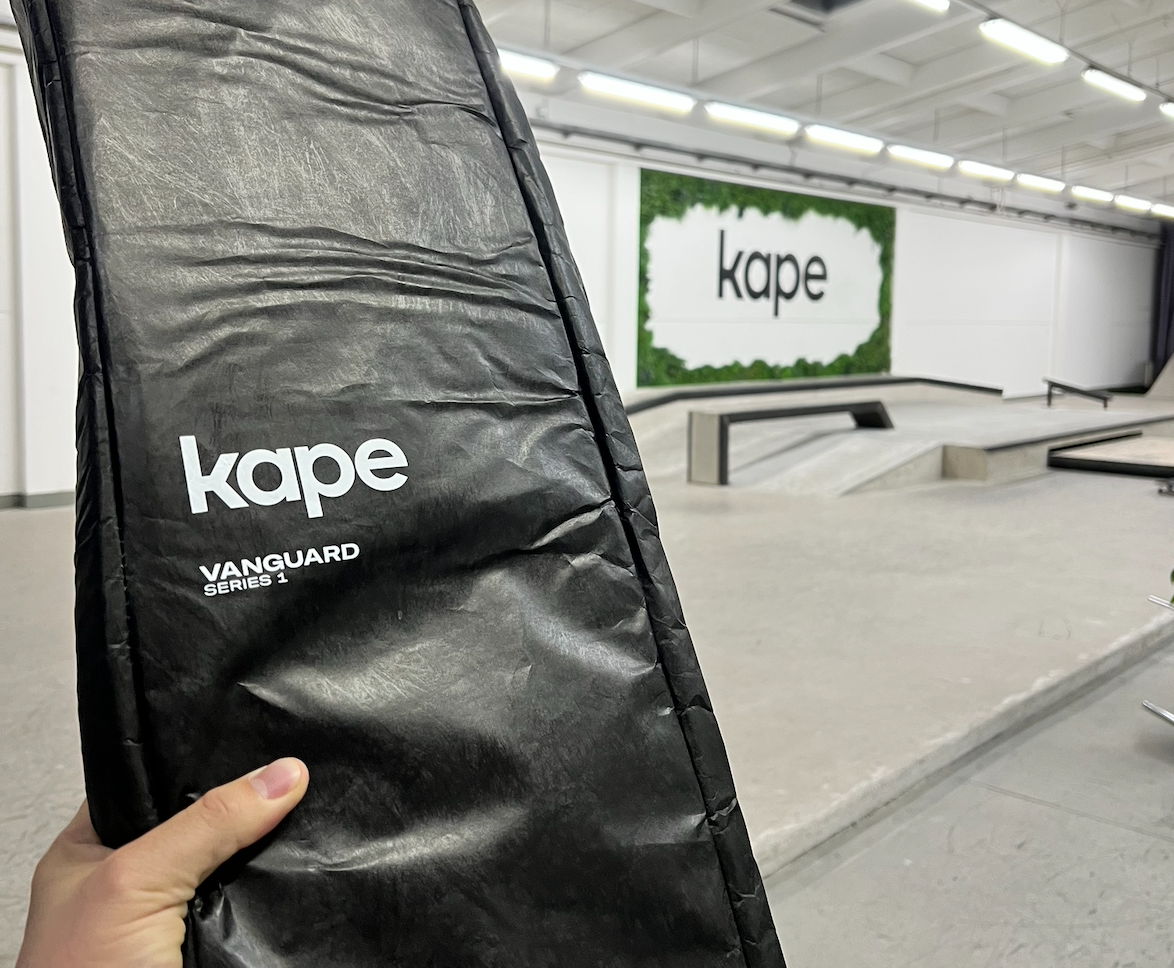
One of the reasons new technology struggles to gain traction in skateboarding is the mental barrier skaters have toward change. I definitely felt that. The first few sessions were strange, not because the board felt bad, but because my brain refused to accept that the piece of plastic under my feet actually felt normal.
I have been skating the board for six months now and I am still skating it. Here is what stood out.
The pop was surprisingly good. There is a solid balance between flexibility and rigidity. Once broken in, the pop stayed consistent throughout the entire six months.
The durability was exceptional. There was no chipping at all, even with heavy wallrides. A friend tried snapping it by stomping on it and had no luck. It may have warped slightly, but it did not break.
The feel took the longest to adjust to. It feels like a wooden board, but slightly denser and softer. The tail still sounds crisp, but the composite construction seems to absorb impact better, making landings feel more forgiving.
The shape was my biggest drawback. I rode an 8.25, but it felt a little smaller than a standard 8.25. Probably a mental thing, but it took some getting used to.
This is an extremely well designed product, and it is obvious how much thought, testing, and feedback went into it. My biggest challenge was not the board, it was my own mindset. Skateboarding does not change easily, and this board forces you to confront that.
They say an open heart leads to an open mind. If you are willing to give this board a fair shot, I am confident you will walk away more impressed than disappointed.
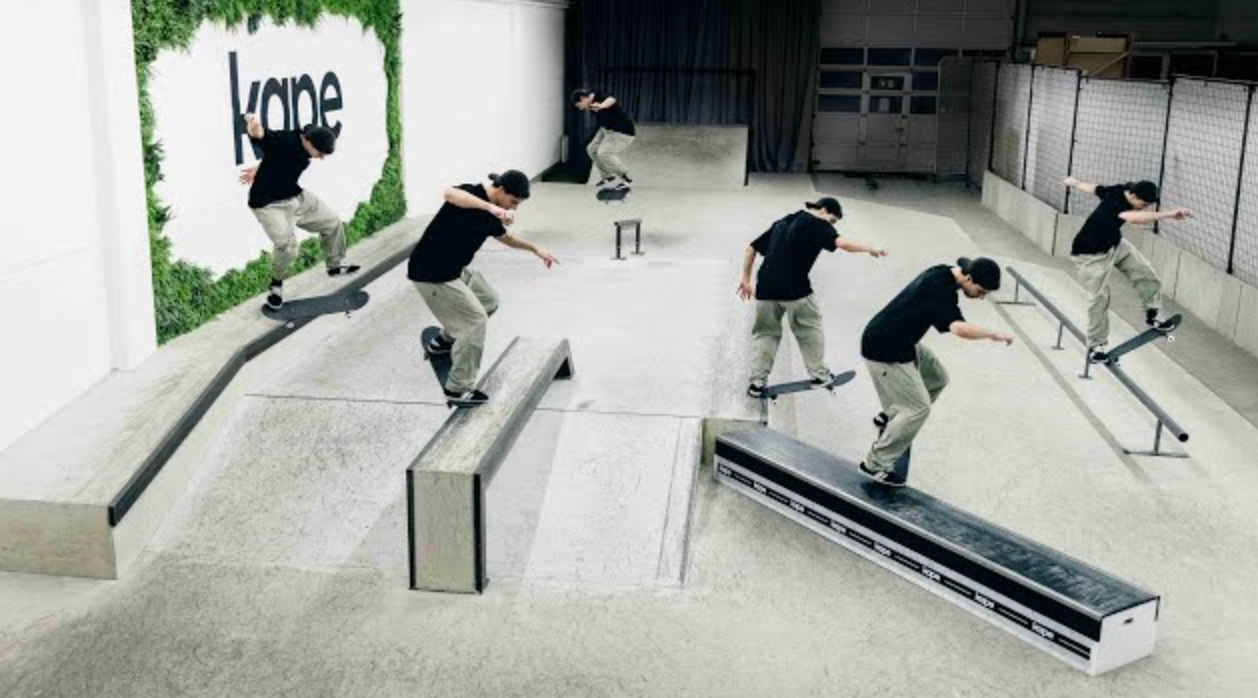
I sat down with Peter for a quick interview. It’s no secret that the business side of skateboarding benefits from shoes wearing out faster and boards breaking more often. Turnover drives sales. At a time when brands are struggling to compete for business, Peter is pushing something completely new. I wanted a glimpse into the reality he saw.
What became clear very quickly is that Peter is someone who figured out what he wanted to do early on, developed the skills to make it happen, and is completely committed to seeing it through.

Peter: I was born and raised in Austria, but both of my parents are from Hungary, so I grew up speaking Hungarian at home. I started skateboarding in 2004. Before that, I went to a sports-focused school and was always around different kinds of sports equipment. When I started skating, I remember thinking it was strange that skateboards were still made of plywood. Other sports had moved on to better materials, so I kept wondering why skating hadn’t. By the time I was 16 or 17, I was breaking boards all the time. I’d save money for months and sometimes snap a deck in the first session, and that’s when I thought there had to be something better. I tried reaching out to skate brands for old molds, but no one replied. That’s when I realized most companies don’t actually make their own decks—they buy them from woodshops and put their name on them. So I started making my own boards in my parents’ garage. My dad, who’s actually a doctor but really handy, helped me build presses and molds. We used scrap metal, hydraulic presses, and CNC-cut parts. Once I started building decks, I became obsessed with the materials. I studied sports equipment technology, learned how fibers behave, and applied everything directly to the boards. I built a new deck almost every day—skated it, found what didn’t work, adjusted fibers, weight, and stiffness, and built it again. That constant cycle of riding, changing, and refining is where everything really began. Every board was a progression. Sometimes it didn’t work at all, but that was part of it. And yeah, that was really the beginning.
I started experimenting with wood combined with fiberglass and carbon fiber. What you see now in boards like the VX, Flight, or DBX decks—I was already doing that about ten years ago. In some ways, those boards were better: they had more pop, they were stronger, thinner and more responsive. But they also chipped like crazy. By 2018 or 2019, I felt stuck. I didn’t really know how to make my boards better using the conventional skateboard-making method of pressing wood layers. So I had to completely rethink how a skateboard could be made. That’s when I started thinking about casting boards instead, because casting would let me control the shape and structure much more precisely. The problem was that a fully plastic board just felt wrong—it was too heavy, too flexible, and didn’t ride well. So the real question became: how do you get fibers into plastic, and how do you keep it light enough? The answer ended up being a technology I’ve been developing over the last five years. It took five full years of R&D. I quit making my old products, stopped selling skateboards, and spent up to eighty hours a week just experimenting. A lot of it didn’t work. But in the end, it did—and now I’m genuinely happy with where it landed.
Peter: Officially, the team is kept tight for now. Right now it’s Levi Löffelberger and Adrien Bulard—that’s the core team. Both skate at a very high level, but in fundamentally different ways. That contrast is key—it produces distinct feedback, which helps us improve the boards for a wide range of skating styles, which is ultimately making the product better.

Peter: Yeah. Right now, Levi is riding a board that’s lighter and flips faster. What’s unique about our technology is that we can control where we use denser or lighter materials, which lets us fine-tune how the board reacts. For Levi’s setup, we reduced weight around the edges, so the board flips faster and higher. For Adrian, we did almost the opposite—his current shape has more strength across the width of the board. These are still prototypes, but that’s how the process starts. Once everything is dialed in, the changes flow into standard production.
We are currently developing a board that is tailored for shorter skaters. Wheelbase, angles, flex and weight must be different for people with shorter legs and lower bodyweight compared to standard boards. That’s not personal preference – it’s bio mechanics. Our technology allows endless possibilities.
That said, skateboarders are pretty conservative. A lot of skaters, especially older ones, have been riding wood for decades and had the best moments of their lives on those boards, so change is hard. Younger skaters tend to be much more open. The interesting thing is that once people actually try the boards—even if they were skeptical—they’re usually stoked and surprised by how good they feel.
We’re already selling boards in 46 countries, and we see that once a board lands in a new place, more orders follow. That shows how much skaters rely on word of mouth. They trust their friends and riders they respect—not marketing or ads. In the end, that’s how real change happens: trusted skaters riding the boards, and friends convincing friends to try them.
Right now, the skateboarding industry is at a low point. After COVID, there’s a massive oversupply of product—shops and brands are stuck with inventory and cutting prices just to move it. But instead of seeing that as a problem, I see it as an opportunity.
Yes, the market is smaller than it’s ever been, and that’s not good. But a smaller market is also easier to reach. It’s much easier to convince a small group of skaters than a massive one. If we can get people to actually ride our boards and feel the difference—not just understand it on a technical level, but really experience it—then we can grow with the market when skateboarding grows again.
We’re not trying to be a brand for every skater. Long term, the bigger goal is to become a white-label manufacturer, similar to a woodshop, and open up our technology to other brands that are willing to use it. Instead of competing in an oversaturated deck market, we want to help other brands make better boards.
The deck market is crowded because there are simply too many brands selling essentially the same product. That makes it hard for any deck company to stand out. That’s why I think it’s essential for board brands to genuinely care about how their boards are made, how they feel, and how they can be better—not just how they look.
For us, it’s product first. You have to believe in what you’re making. A lot of skate companies are really media companies—they focus on image and marketing more than the actual product. We’re doing the opposite. If the product is right, everything else follows.
When skaters ride our boards and experience the difference for themselves, trust follows. And when skateboarding grows again, we grow with it.