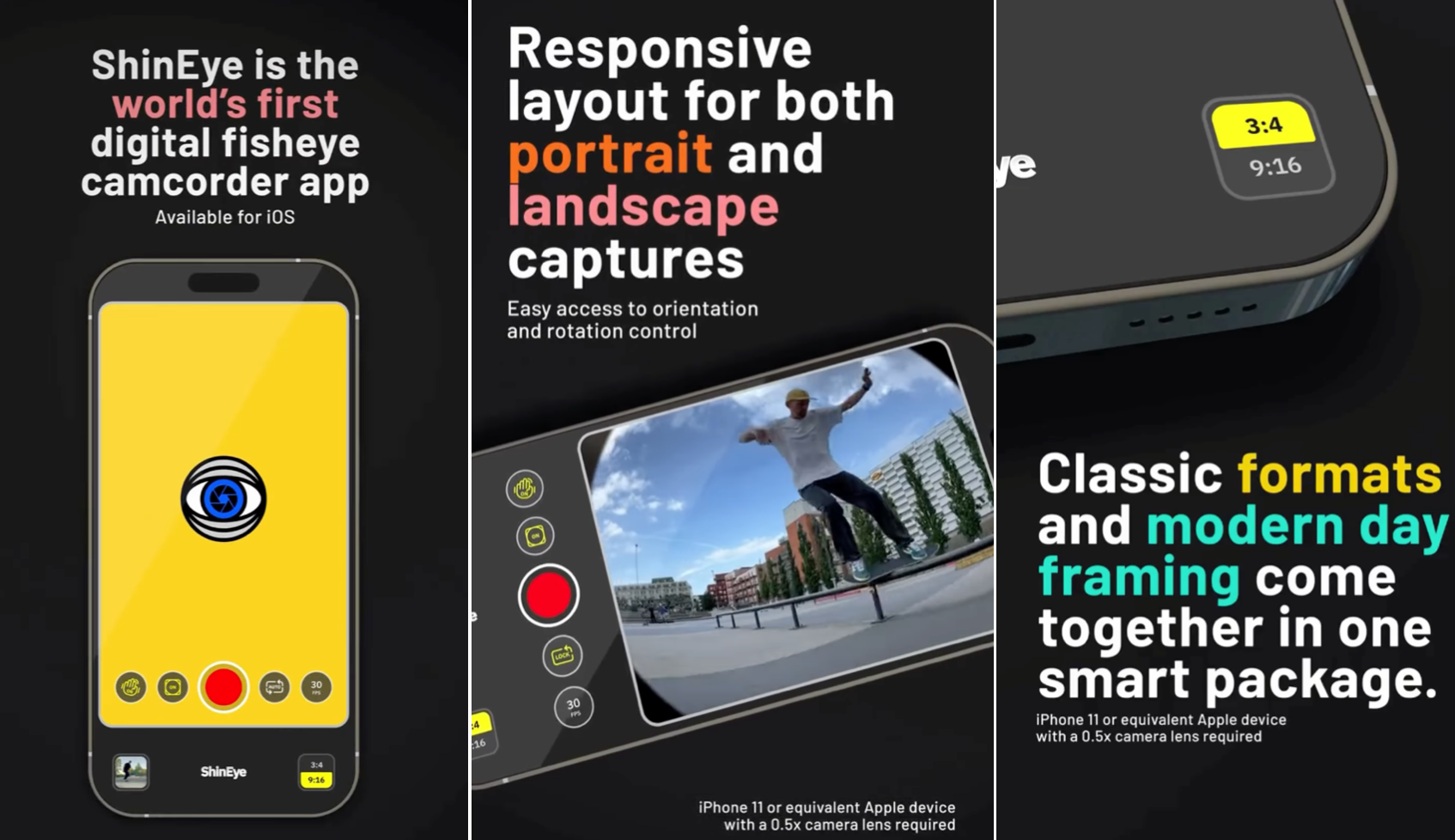

Fisheye footage has always been one of skateboarding’s core visual languages. From lines to single tricks, the fisheye look turned skateboard videos into something visceral, it became part of how skateboarding is documented.
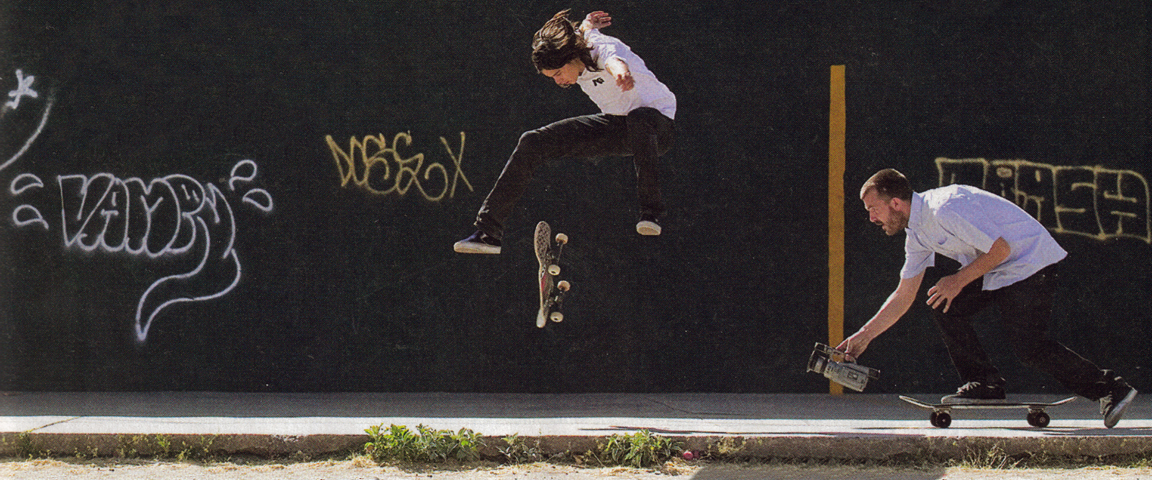
The VX1000 paired with a Mk1 fisheye lens shaped an entire era of skating and its influence is still easy to spot in edits today. But that iconic look came at a cost. VX setups and later digital cameras are heavy. Filmers spent years carrying camera bodies, lenses, handles, batteries, chargers, and backups, often hauling 10+ kilos through the city on a filming trip. Anyone who’s done it knows it’s part of the process, but it’s never been fun.
Today, the most common filming tool fits into your pocket: your phone. It’s light, always with you, and technically impressive but on the other hand visually often too clean, too corrected, and too wide in the wrong way to naturally capture the feel of classic fisheye skate footage.
That gap is where Shineye steps in.
Martin Ottosson, Daniel Hansson and Danijel Stankovic (Shinner Crew) from Malmö created Shineye after constant debates about why phone footage never hit the right vibe.
“It was one of Martins brilliant ideas, as he’s always on the chase on how to make things better” Danijel recalls. “We end up always talking and hating on the current formats of the iPhone or GoPro cams, that it looks very skewed and not correct how we like skateboarding to look”.
Those conversations eventually led to a key realization: Apple’s ultra-wide 0.5 lens wasn’t actually behaving like a real fisheye lens at all, it was software manipulation.
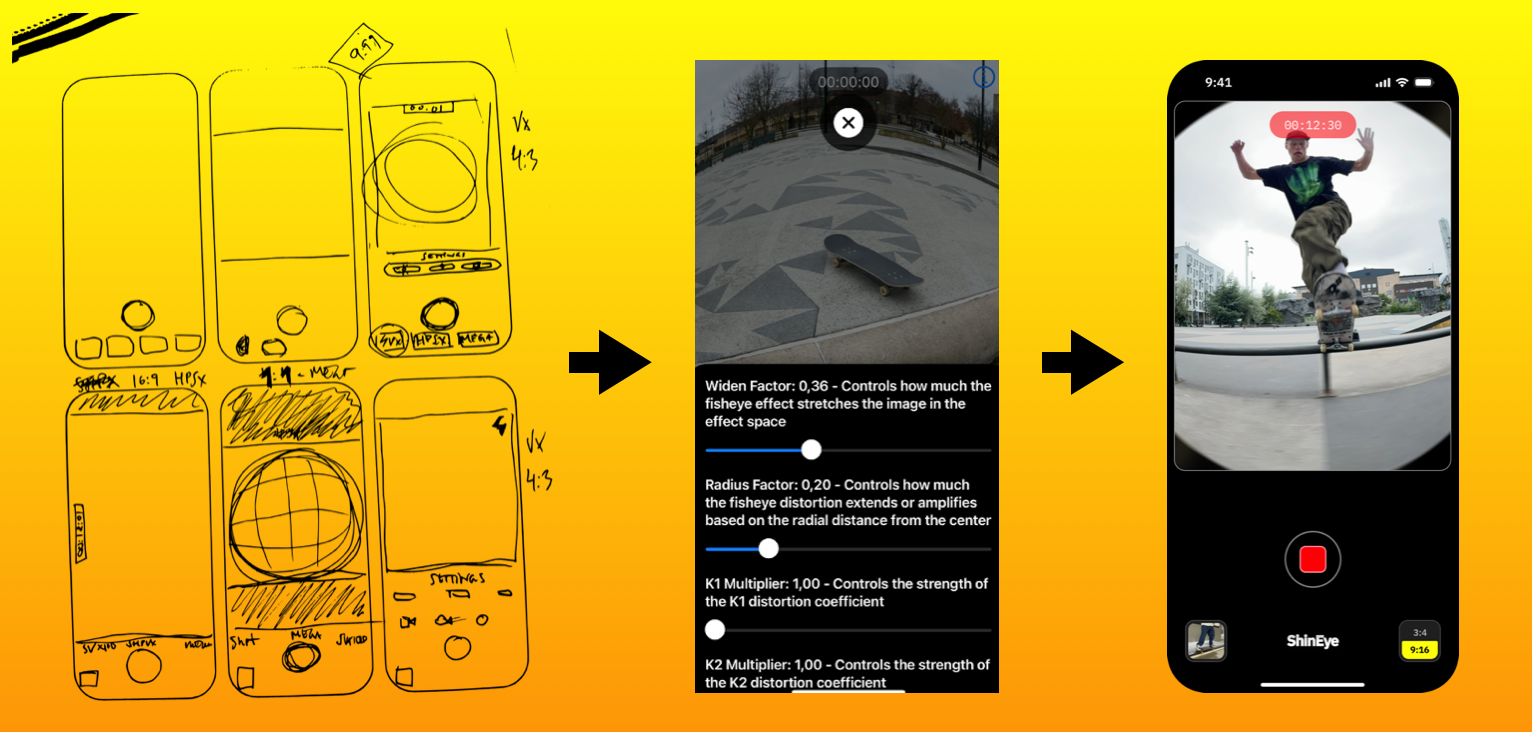
“Once we realized that 0.5 wasn’t the lens, but a software manipulation we decided to give it a try. I brought some 0.5 wide-angle shots into After Effects and applied a series of effects to them,” Martin explains. “I wanted to see if a fisheye effect on rectilinear footage was even feasible from a technical point of view. And it was.”
Even with that realization, there was an early moment where the project’s future wasn’t entirely clear.
“There was one moment where we got stuck on some of the technical aspects of the actual fisheye distortion,” Martin says. “But Daniel did an amazing job finding a solution to it. That felt like a true Eureka moment, and from there on it was full speed ahead, fine-tuning both the effect and the UX.”
From concept to App Store release, Shineye took roughly a year and a half to complete. Development began at the end of 2024, with the first public version launching in July 2025.
The VX1000/fisheye footage makes tricks feel closer, lines look faster, and exaggerates movement in a way that pulls you straight into it. The vignette, curvature, slight shake and edges all add up to footage that feels raw.
Shineye aims to mimic classic fisheye behavior digitally, using software-based lens simulations and image processing, with the effect applied to a full sensor readout (open gate) rather than the cropped output used by standard camera apps. One of the App’s biggest strengths is its simplicity: no login, no cloud, no sign-up. You open it, film, and export. No adapters, handles, or heavy gear needed.
“We worked with a lot of people to get the effect right,” Danijel explains, “especially students at Bryggeriet Gymnasium, but also Pros and filmers through beta tests. I think the first time I properly tested the final product was with Stefan Janoski in Paris.”
Because the workflow is digital from the start, Shineye makes editing and exporting straightforward. Clips drop directly into Instagram, TikTok, or full-length edits without extra steps, so all the VX energy, none of the gear hassle.

At first glance, Shineye’s digital fisheye curve comes surprisingly close to the familiar VX1000/fisheye look. The edges bend in a predictable, natural way, the center remains sharp, and objects are pulled toward the lens with the same intensity that makes fisheye footage so engaging.
Comparing Shineye’s clips to real VX footage reveals the main differences. The parts that feel right are the curve, the proximity, and it genuinely captures that “in your face” vibe. What feels new is the cleaner, brighter and more stable image that naturally comes from the iPhone camera. It’s a small reminder that you’re filming digitally, but in a way that actually complements the look.
“We really wanted to nail the feeling you get from a Death Lens on a VX or the Century Xtreme fisheye on an HPX,” Martin explains. “Obviously, the hardware limitations of the iPhone mean we can’t go quite as extreme, but with a small adjustment to your filming style, you can get surprisingly close to the real thing.”
In the end, Shineye delivers the feel skaters are searching for. A good takeaway here is that the goal isn’t to replace cameras like the VX1000 or the equipment that shaped skateboard filming for decades. Instead, Shineye aims to change the way iPhone footage looks and feels. It brings character back into smartphone filming, letting clips carry the same nostalgia and energy that made the VX era so iconic.
As Danijel puts it: “Trust me – this doesn’t replace your VX, but it lets your phone pretend it grew up in the late ’90s.”

Shineye doesn’t try to replace the VX or Digital camera setup and it doesn’t need to. What it offers is a modern reinterpretation of a visual language that still matters.
It strips away the backpack full of gear while keeping the fisheye look that defined an era of skateboard filming. It brings character back into smartphone footage and makes fisheye-style filming accessible to anyone with an iPhone.
For skateboarders and filmers who value convenience but still want that fisheye look, Shineye is one of the most exciting tools for 2026.